Research note
Why LUPI?
A browser-native molecular viewer for makeability
The belief
Molecular structures should not live behind a paywall, a download, or a command line. The moment someone wants to see what a prediction actually looks like, the tool should already be open in the browser.
That is the idea behind LUPI (lupi.live): a lightweight, web-native molecular viewer that turns structures into something anyone can rotate, measure, and share. No installation. No account. No friction between the data and the observer.
The problem in one sentence
Most molecular viewers are either too heavy to share or too simple to trust.
Desktop tools are powerful, but they trap knowledge on a single machine. Screenshot culture replaces real exploration. Lightweight web viewers, meanwhile, often sacrifice accuracy: they render pretty balls-and-sticks but hide the coordinates, the uncertainty, and the context that make a structure meaningful.
LUPI sits in the middle. It is built for the web first, with enough fidelity to inspect real predictions and enough simplicity to drop into a paper, a slide, or a classroom.
The design
LUPI is the public face of Lupine Science. It has three jobs:
-
Show structures as they are. Load molecules and materials in standard formats, render them faithfully in the browser, and expose the underlying data instead of hiding it.
-
Make measurement effortless. Distance, angle, and coordination environments should be a click away, not a plugin away.
-
Travel with the claim. Every structure in LUPI can be linked, embedded, and inspected by anyone. Trust comes from shareability.
Under the hood, LUPI connects back to the same formalized makeability record that powers Lupine Science: a growing chain of commitments, simulations, and certificates that say not just what a structure is, but why it can be made.
The launch film
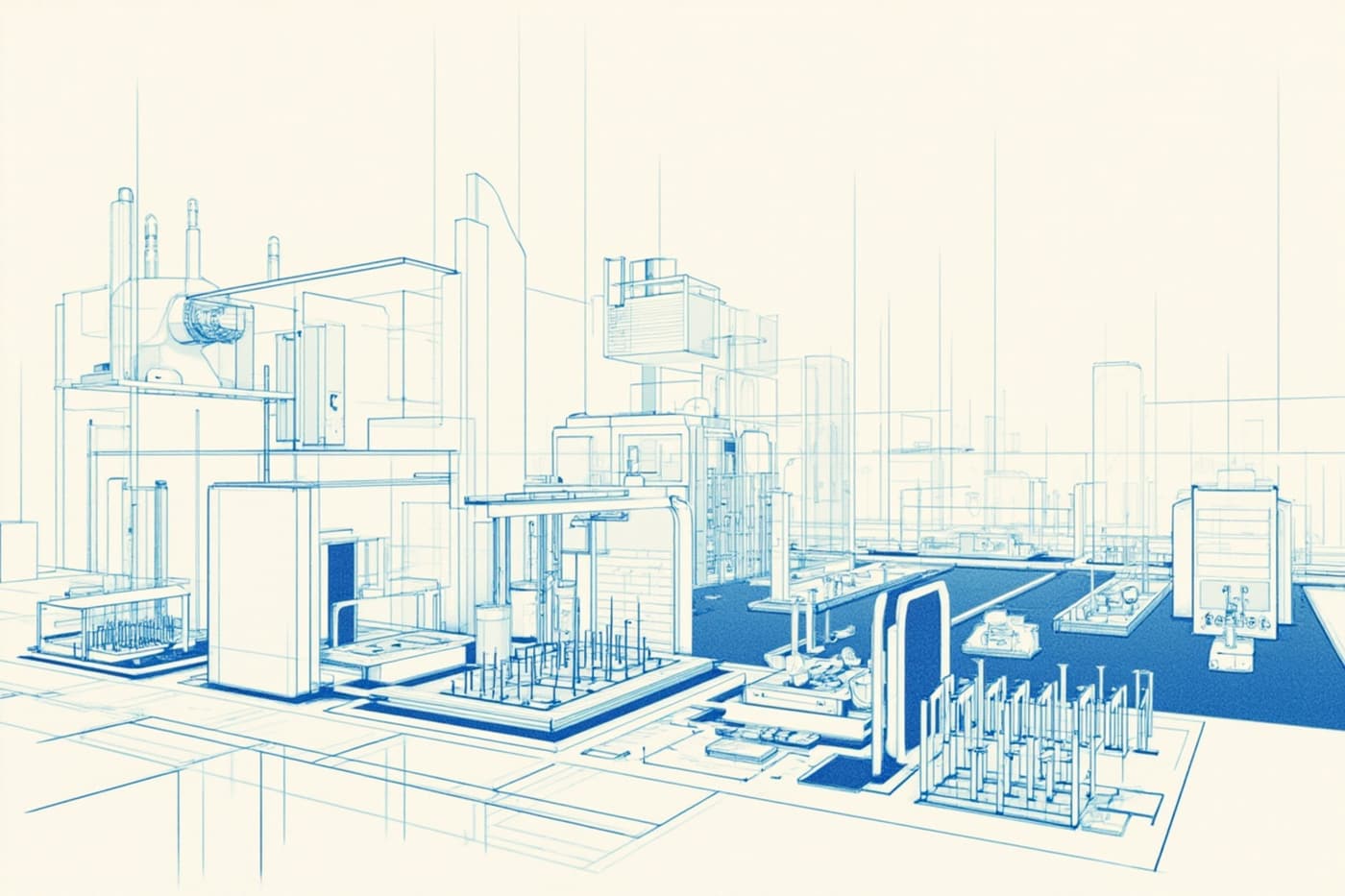
The thirty-second film is the first public introduction to LUPI: a sequence of molecular scenes, narrated and scored, that moves from a single structure to the idea of a shared, inspectable world of makeable materials.
The film is generated with AI tools and composited with open-source software. The same principle applies to the viewer itself: AI generates the picture; rigorous process produces something shareable.
Why now
Three things make a browser-native viewer the right shape for this moment:
- WebGL and WebGPU can now render complex molecular scenes smoothly on ordinary devices.
- Generative models are producing more structures than ever, and each one needs a URL, not just a filename.
- Open science norms are pushing data and tools toward public, inspectable interfaces rather than static figures.
LUPI is a bet that the winning interface for molecular discovery will be the one that lets a stranger walk up to a structure and understand it in seconds.
The invitation
LUPI is live. Try it, break it, and report what is needed.
To share structures, teach students, or publish simulations, get in touch.
Visit lupi.live.