L(θ) · objective
Before a lab spends a year on a material, know whether to trust the prediction.
Machine-learned potentials now screen batteries, catalysts, and frameworks faster than any lab can test them. The gap is not speed. It is verification: a model can be confident and wrong, and the cost of finding out is measured in years and missed targets.
Characterize prediction error as a physical field, correct it at runtime, and machine-check every claim.
figures on this page are recomputed in-browser from the committed benchmark — see the data ↗
∫M · error manifold
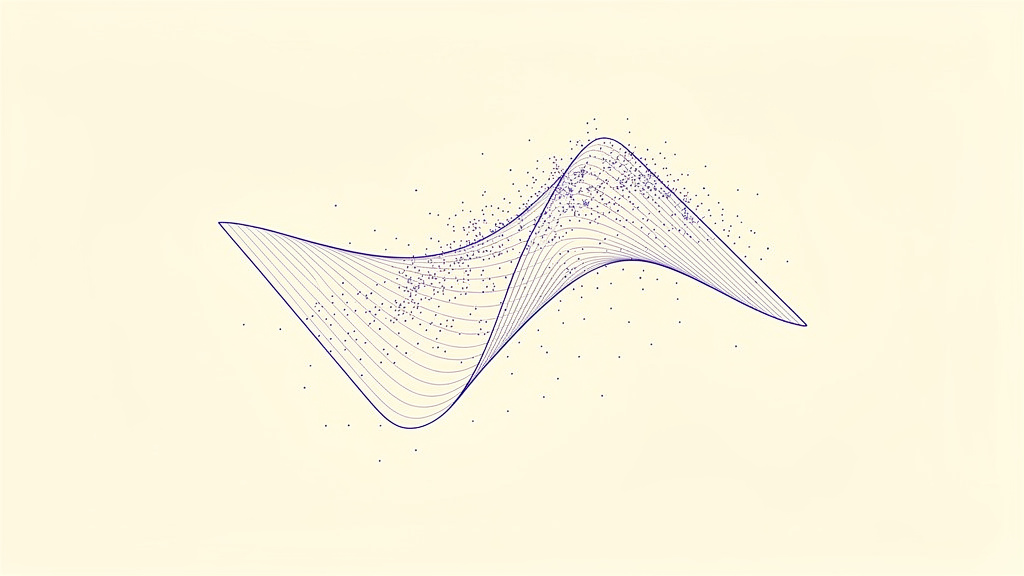
Prediction errors collapse onto a low-dimensional ribbon.
1.1–2.0participation ratio: errors move in only ~1–2 directions out of five
range recomputed in-browser from the committed benchmark — see the data ↗
Across classic and machine-learned potentials, atomic-force errors do not scatter randomly. They line up. That geometry makes failure predictable, and predictable failure is correctable failure.
∇γE · error vectors
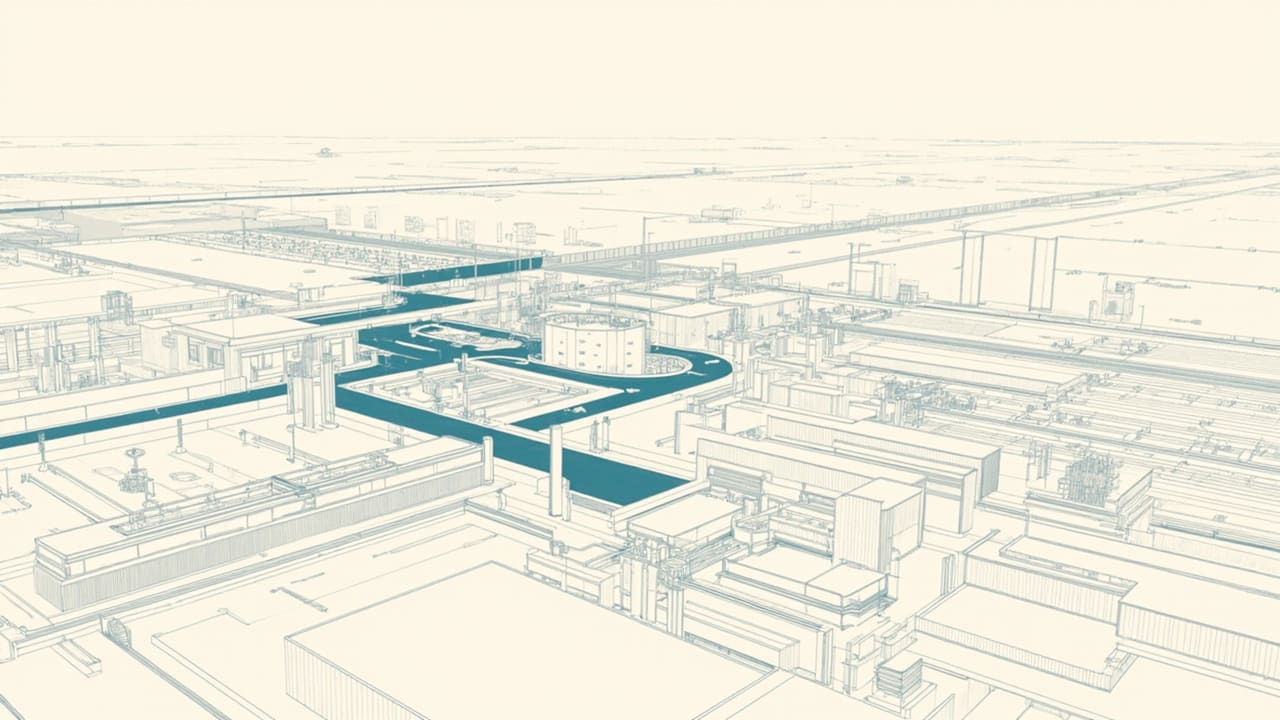
Shared error directions make failure predictable across models.
~70%of dominant error directions are shared across potentials
overlap recomputed in-browser from the committed benchmark — see the data ↗
The same local environments — surfaces, vacancies, under-coordinated sites — bias different potentials in similar directions. Where raw alignment can flatter (coupling-aware nulls reach 0.98), what survives blind tests is stronger: rankings hold (r = 0.906 across 36 model–material cells) and the error follows a smooth, coordination-keyed field. Read the live evidence →
Ω(Ξ) · public ledger
Claims are checked by machine, in public.
899build-locked theorems in the open Lean library, zero sorry — counted from source
ribbon check recomputed in-browser from the committed benchmark — see the data ↗
Core claims are sealed as Lean 4 theorems with hash-locked provenance. The proof layer refuses as readily as it accepts — it once caught a rounded success count and changed 27 improvements to 26. The ledger is the public record of every claim, refutation, and correction.