Research note
From Fantasy Frameworks to Makeable Materials: A Prospectus for Formalized MOF Discovery
Metal–organic frameworks (MOFs), covalent organic frameworks (COFs), and other high-value reticular / complex molecular structures
The headline
Generative AI can now invent millions of new metal–organic frameworks. What it cannot yet do is promise that any of them can be made.
In the first half of 2026, that gap has become the central bottleneck in materials AI. A Chemical Science perspective published in June calls synthetic likelihood “a fundamental challenge” and argues the field must move from performance-driven screening to synthesis-informed design, with free energy as the physically grounded metric.[1] A January 2026 analysis put the scale of the problem in stark terms: of thousands of computational MOF screenings, only about a dozen had been accompanied by actual synthesis.[2]
The next phase of the OpenDistillationFactory formalization effort is proposed: a theorem-proved “makeability layer” for AI-generated materials, built in partnership with a research organization that can both generate structures and test them in a lab.
The goal is a flywheel in which every simulated candidate carries a formal certificate of validity, every experiment updates the certificate rules, and every cycle makes the next cycle faster.
A one-minute primer
For readers who do not spend their days inside reticular chemistry or proof assistants:
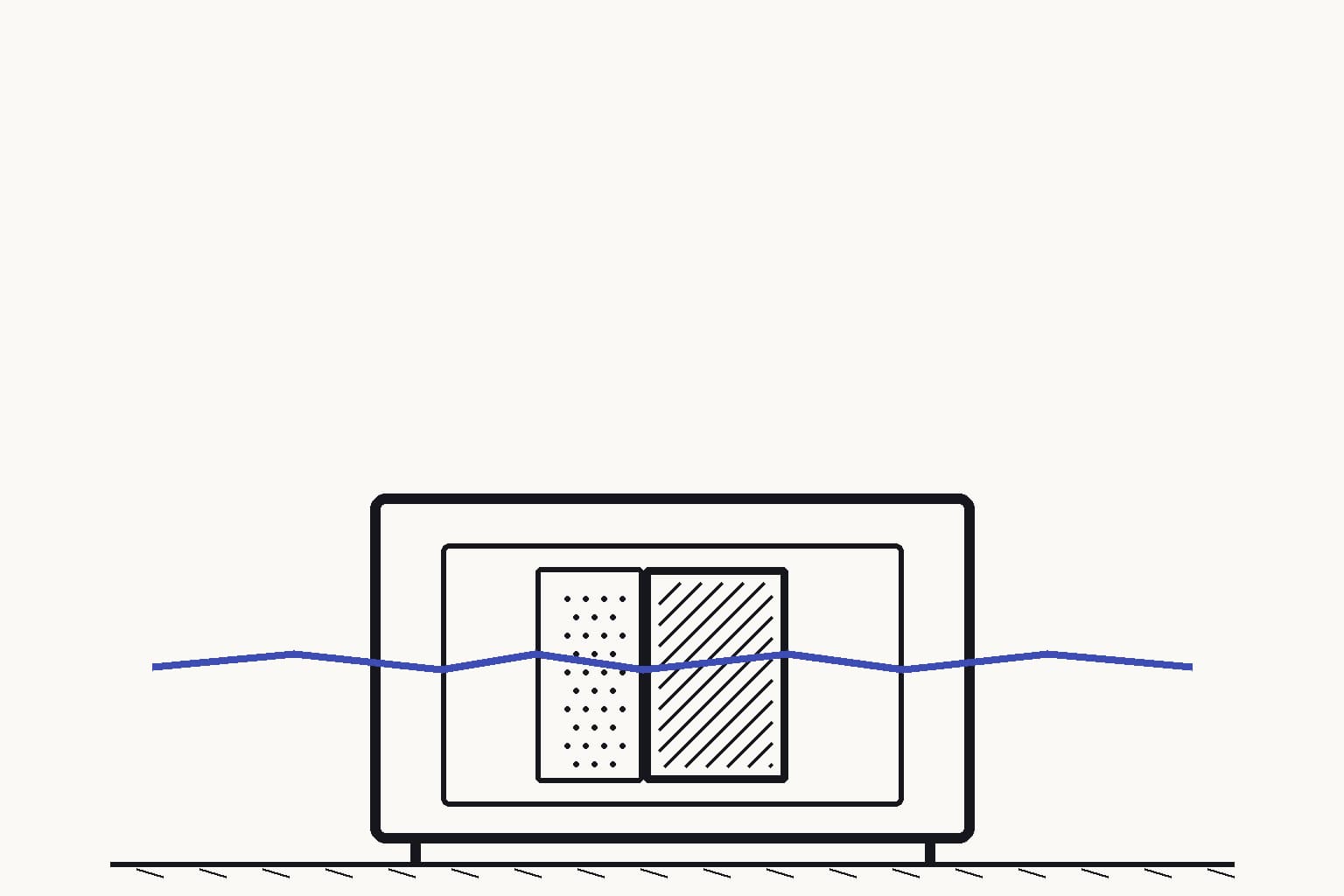
- MOFs are crystalline sponge-like materials built from metal “nodes” and organic “linkers.” Their pores can store hydrogen, capture CO₂, separate gases, or host catalysts. Because the building blocks are modular, the design space is astronomical.
- Generative AI (diffusion models, graph neural networks, large language models) can now propose new MOFs at machine speed. Recent systems include MatterGen, GNoME, MOF-LLM, and ChatMOF.
- The synthesis gap: a structure that is stable on a computer screen may be kinetically inaccessible, chemically incompatible with real solvents, or so strained that it collapses the moment it is isolated. Most AI-generated MOFs are, in effect, fantasy frameworks.
- Formalization means encoding the rules of MOF assembly, stability, and synthesis in a proof assistant (the formalization uses Lean 4) and proving theorems about them. The output is not a prediction; it is a certificate: a machine-checkable argument that a candidate satisfies stated assumptions.
The prospectus addresses two questions: what a formalized materials-discovery pipeline would look like, and why a materials-generation lab should partner to build it.
Why now? The H1 2026 landscape
China is pushing the synthesis frontier. In May 2026, researchers reported that an alternating electric field can cut MOF synthesis from overnight to 15–60 minutes without added heat or catalysts.[3] A June 2026 study described light-driven synthesis “beyond thermodynamic constraints.”[4] Tsinghua and Nanjing University’s MOF-LLM is the first large-language-model system for block-level MOF structure prediction.[5] Chinese institutions also dominate the patent landscape for covalent organic frameworks.[6]
The United States is pushing the generative-model and autonomous-lab frontier. Microsoft’s MatterGen demonstrated property-conditioned diffusion for inorganic crystals.[7] Google DeepMind’s GNoME seeded an active-learning recipe that is now being replicated across the field.[8] Foundation machine-learning interatomic potentials such as MACE-MP-0 are replacing DFT in production molecular dynamics at national labs.[9] The NSF AI-for-Materials Research Institutes and DARPA FY2026 materials programs are investing heavily in “scientific AI” that extracts generalizable abstractions from experimental data.[10][11]
The common thread: both sides have moved past the “generate more structures” phase and are converging on the same question: which generated structures are worth making?
That is a formalization problem in disguise.
What formalization adds to each stakeholder
For investors: de-risk the bet
Materials AI has produced eye-popping demos, but the path from demo to product is littered with structures that look good on paper and fail in the lab. A formalized pipeline changes the investment case:
- Makeability certificates turn synthetic likelihood from a hunch into an auditable predicate.
- Data network effects arise because every failed synthesis, when encoded formally, improves the next generation of certificates.
- IP moat comes from the theorem library itself: a competitor can copy a model, but it cannot quickly copy a machine-checked theory of what the model is allowed to propose.
- Capital efficiency improves because the lab queue is pre-filtered by rigorous constraints, not just model confidence.
For materials scientists: reproducibility, not just novelty
The experimental side of the field is already wary of AI-generated structures that do not survive contact with reality. Formalization offers:
- A shared vocabulary for valid assembly (charge balance, valence, topology, no atomic clashes).
- Explicit stability thresholds drawn from the literature, not from model optimism.
- A data-audit layer that catches the structural errors, duplicate polymorphs, and oxidation-state mistakes that plague curated databases.[12]
- Synthesis-condition predicates that connect a candidate structure to a real protocol: solvothermal, electric-field, microwave, or mechanochemical.
For AI-for-science teams: correctness as a feature
Generative models for materials face the same correctness challenge as large language models: they can hallucinate. Formalization gives those models a guardrail:
- Hard constraints on generator output: valid chemistry, periodic symmetry, SE(3) equivariance, novelty with respect to training data.
- Benchmarks defined by provable properties, not just leaderboard rankings.
- Uncertainty quantification tied to certificate coverage: a candidate is either inside the certified region or flagged as outside.
The proposed formalization roadmap
The makeability layer would be built as a series of Lean modules. Each module addresses a distinct gap in the current pipeline.
1. ReticularAssembly.lean — what is a valid structure?
A typed grammar of MOF/COF/reticular materials:
- Metal nodes / secondary building units (SBUs).
- Organic linkers with connectivity and symmetry.
- Topology nets from the Reticular Chemistry Structure Resource (RCSR).
- Periodic embeddings and collision-free assembly.
Key theorem class: charge balance, valence satisfaction, and net compatibility are decidable for a given assembly.
2. Synthesizability.lean — can it be made?
The core makeability certificate. It formalizes the free-energy and kinetic-accessibility arguments that the Chemical Science perspective identifies as central:[1:1]
- Free-energy window relative to competing phases.
- Linker-strain bounds.
- Solubility and solvent-compatibility predicates.
- Synthesis-condition models: solvothermal, electric-field, microwave, mechanochemical, sonochemical.
Key theorem class: if a structure satisfies the makeability certificate under a specified synthesis protocol, then it is synthesizable under the assumptions encoded in the certificate.
3. StabilityBound.lean — will it survive operation?
Thermal, chemical, and mechanical stability thresholds, plus defect tolerance:
- Framework collapse thresholds under adsorption/desorption cycles.
- Defect-density bounds that preserve pore connectivity.
- Polymorph stability landscapes.
This module directly connects to existing work on error geometry and smooth projections: a stable framework is one whose geometric neighborhood contains no low-energy collapse mode.
4. GenerativeValidity.lean — what can the generator legally propose?
Invariants for diffusion models, graph neural networks, and LLMs that generate structures:
- Chemical validity (charge, valence, collision-free).
- Novelty: lower bound on distance to the training set and to known databases.
- Symmetry: SE(3) and periodicity are respected.
- Topology consistency: the generated structure realizes the claimed net.
5. MOFDataAudit.lean — is the training data trustworthy?
Formal predicates for database integrity:
- Correct oxidation states.
- Unique identity up to symmetry.
- Disorder and partial-occupancy flags.
- Experimental vs. simulated provenance.
This addresses the documented “high structural error rates” in computation-ready MOF databases.[12:1]
6. MultiObjectiveDiscovery.lean — can multiple properties be optimized at once?
Pareto-front convergence for conflicting objectives such as CO₂ uptake, water stability, and cost. Active-learning regret bounds adapted to discrete materials spaces would be formalized.
7. AutonomousLab.lean — can the robot be trusted?
A long-term formal model of the closed loop:
- AI planner → robotic synthesis → automated characterization → feedback.
- Safety invariants (no banned precursor combinations).
- Compliance invariants (temperature, pressure, reagent limits).
- Convergence guarantees: objective improves or uncertainty shrinks under stated assumptions.
The partnership flywheel
A formalization effort in isolation is valuable; a formalization effort tethered to a real lab is transformative. The partnership requires an organization with:
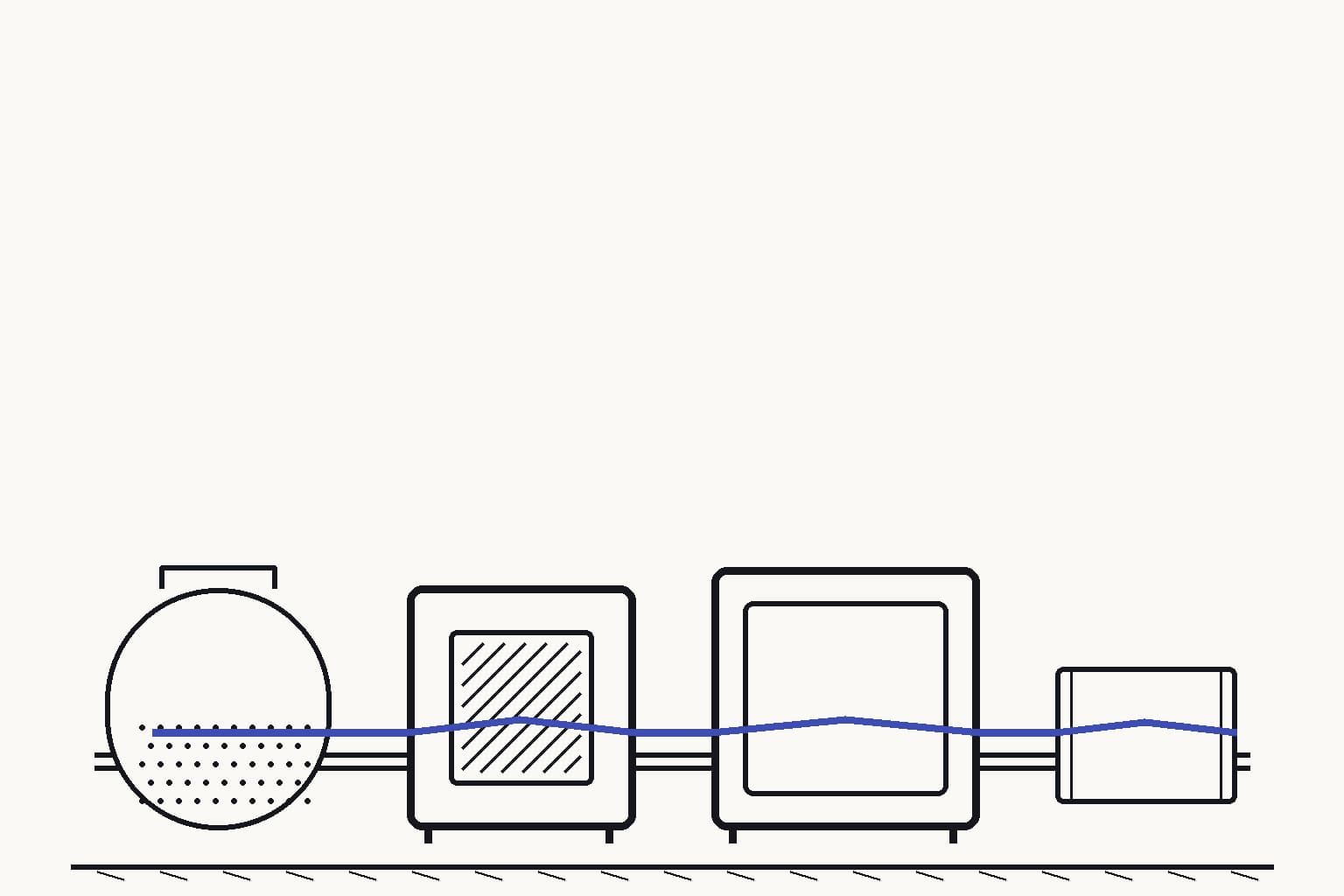
- A high-throughput materials-generation platform (generative models, structure databases, or computational screening pipelines).
- Access to automated or semi-automated synthesis and characterization (robotic synthesis, flow chemistry, PXRD, gas-adsorption, electron microscopy, etc.).
- A willingness to share both successes and failures under an agreed data framework.
The flywheel works like this:
┌─────────────────────────────────────────────────────────────┐
│  1. FORMALIZE   →  Define makeability/stability predicates   │
│                 in Lean using literature thresholds.         │
└──────────────────────┬──────────────────────────────────────┘
                       │
                       ▼
┌─────────────────────────────────────────────────────────────┐
│  2. SIMULATE    →  Partner’s generator proposes candidates.  │
│                 Only certified candidates pass the filter.   │
└──────────────────────┬──────────────────────────────────────┘
                       │
                       ▼
┌─────────────────────────────────────────────────────────────┐
│  3. SYNTHESIZE  →  Lab tests certified candidates.           │
│                 Success *and* failure are logged.            │
└──────────────────────┬──────────────────────────────────────┘
                       │
                       ▼
┌─────────────────────────────────────────────────────────────┐
│  4. FEEDBACK    →  Experimental results refine predicates.   │
│                 Failed syntheses tighten the certificate.    │
└──────────────────────┬──────────────────────────────────────┘
                       │
                       ▼
              (back to 1, with stronger theory)
Each loop does three things:
- Reduces the number of pointless experiments. Candidates that violate a hard constraint never reach the lab.
- Turns failures into assets. A failed synthesis, once formalized, becomes a theorem that rules out an entire class of future candidates.
- Builds a defensible knowledge base. The growing proof library is a durable asset that improves every model the partner trains on it.
Starting point
The proposal does not attempt to boil the ocean. The first 12–18 months would focus on a narrow, high-impact slice:
- ReticularAssembly for one well-studied MOF family (e.g., Zr-carboxylate MOFs such as UiO-66 / UiO-67).
- Synthesizability for one synthesis modality (e.g., electric-field-assisted solvothermal synthesis, following the 2026 literature).[3:1]
- StabilityBound for one operational stressor (e.g., solvent-removal / activation stability).
- DataAudit for one public database (e.g., CoRE MOF or a partner-internal dataset).
- A closed-loop pilot in which the partner generates candidates, the predicates filter them, the partner synthesizes a prioritized subset, and the results update the predicates.
This narrow scope lets each side show measurable value before scaling.
Track record
The OpenDistillationFactory project has already built a machine-checkable theory of error geometry for machine-learning interatomic potentials. The most recent milestone, ExactTubularUniversality.lean, closed its last formal gap using a theorem-proved tubular-neighborhood framework and is now fully built by lake build with zero remaining sorry axioms. The project inventory currently stands at 85 formally proven lemmas and 0 documented epistemic gaps.[13]
That track record matters because the next phase is harder: moving from geometry to chemistry. The discipline is the same—state assumptions explicitly, prove theorems under those assumptions, and let experimental data tighten the assumptions.
Call to action
If you are:
- a materials-generation lab (national lab, university group, or startup) with automated synthesis capacity,
- an AI-for-science team building generative models for MOFs, COFs, or complex molecular solids, or
- an investor looking for a differentiated way to de-risk materials-AI portfolios,
get in touch.
The next frontier in materials discovery is not generating more structures. It is proving which ones are worth making.
References and notes
“Interrogating the synthetic likelihood of metal–organic frameworks: a digital discovery perspective,” Chem. Sci., 2026. DOI: 10.1039/D6SC02765B. ↩︎ ↩︎
HyperAI, “Highly Accurate and Fast Prediction of MOF Free Energy via Machine Learning,” Jan 2026. https://hyper.ai/en/news/48685. ↩︎
Chemistry World, “Electrifying MOF synthesis drastically reduces time it takes to make them,” May 2026. https://www.chemistryworld.com/news/electrifying-mof-synthesis-drastically-reduces-time-it-takes-to-make-them/4023477.article. ↩︎ ↩︎
“Building Frameworks With Light: Breakthrough in Precise Synthesis of MOFs Beyond Thermodynamic Constraints,” Rare Metals, June 2026. https://www.researchgate.net/publication/407543642_Building_Frameworks_With_Light_Breakthrough_in_Precise_Synthesis_of_MOBs_Beyond_Thermodynamic_Constraints. ↩︎
Pan et al., “Enhancing Spatial Reasoning in Large Language Models for Metal-Organic Frameworks Structure Prediction,” KDD 2026. https://arxiv.org/html/2601.09285v2. ↩︎
PatSnap, “Covalent Organic Framework Technology Landscape 2026,” Apr 2026. https://www.patsnap.com/resources/blog/articles/cof-technology-landscape-2026-35-patent-insights/. ↩︎
Zeni et al., “A generative model for inorganic materials design,” Nature, Jan 2025. https://www.nature.com/articles/s41586-025-08628-5. ↩︎
Merchant et al., “Scaling deep learning for materials discovery,” Nature, Nov 2023; 2026 analysis at https://iotdigitaltwinplm.com/geometric-deep-learning-materials-discovery-gnome-mattergen-2026/. ↩︎
MACE-MP-0 and Allegro/MACE class potentials are discussed in the 2026 geometric-deep-learning overview at https://iotdigitaltwinplm.com/geometric-deep-learning-materials-discovery-gnome-mattergen-2026/. ↩︎
GrantedAI, “NSF AI-Materials Institute (NSF AI-MI) (2026).” https://grantedai.com/grants/nsf-ai-materials-institute-nsf-ai-mi-national-science-foundation-nsf-8eb3788c. ↩︎
DARPA, FY2026 Materials Sciences Studies and Concepts justification. https://comptroller.war.gov/Portals/45/Documents/defbudget/FY2026/budget_justification/pdfs/03_RDT_and_E/RDTE_Vol1_DARPA_MasterJustificationBook_PB_2026.pdf. ↩︎
White et al., “High Structural Error Rates in ‘Computation-Ready’ MOF Databases Discovered by Checking Metal Oxidation States,” J. Am. Chem. Soc., 2025. ↩︎ ↩︎
OpenDistillationFactory
Vision.leaninventory, updated 2026-06-25: 85 proven lemmas, 0 documented epistemic gaps; fulllake buildpasses. ↩︎